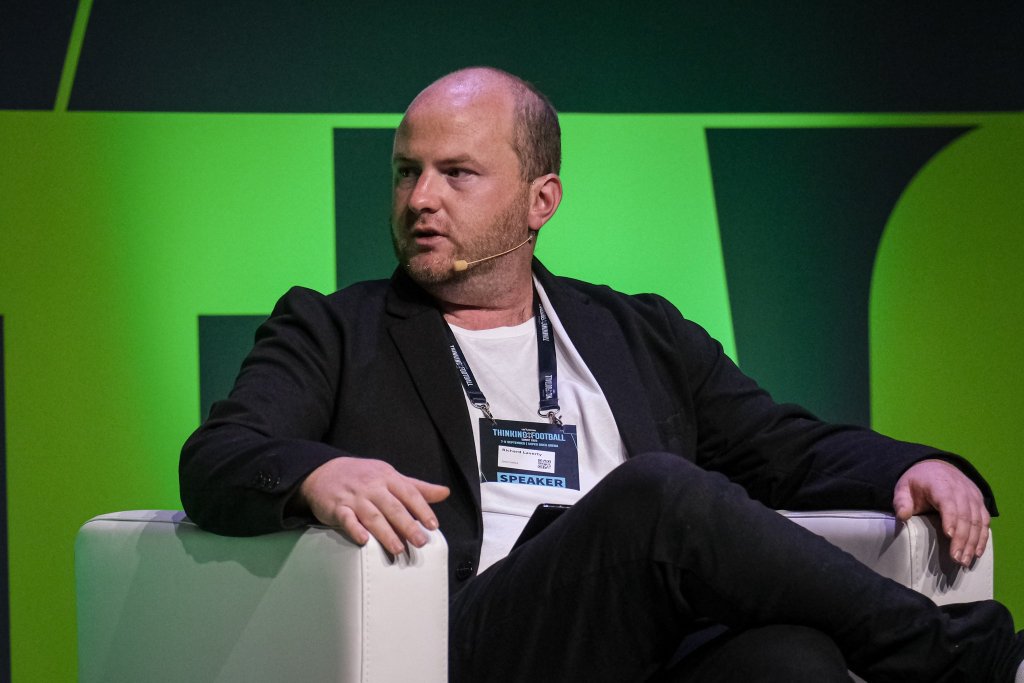
I recently had the pleasure and privilege of conversing with journalist Rich Laverty. Having written for the likes of The Athletic, The Guardian, The Times, FourFourTwo and many others, Rich has a wealth of knowledge about women’s football which he expands upon with analysis, depth and narrative. I spoke to him about his path to the present day, his work within the women’s game, and what his role entails.
SG: Hi Rich, thank you for taking the time to speak to Shegulls! Just to start could you give a brief overview of your current role and the type of work you are involved in?
RL: I’ve been a freelance women’s football writer ever since I left University really. I stumbled into the women’s game a little bit as in 2013 it just wasn’t possible to make a career out of writing about the women’s game, and while I’d love to say I knew in 10 years it would be as big as it is now, I didn’t! I stuck with it largely because I enjoyed it and as a writer at the time the access was excellent. It’s still good, but much tougher than it was obviously given the scope of the game and the amount of writers, broadcasters etc involved now.
In 2018, I also got involved on a freelance basis with Sheffield United, my local club in the top two tiers, just helping with their matchday media and social media and to build an audience as we were new to the Championship at that point. I’m still involved, again still largely around matchdays, and it’s interesting to be on the other side of the curtain so to speak, but juggling the two on a freelance basis works for me and it’s a nice balance.
Interesting, so how did you get involved in journalism? What was your journey like within the industry?
I knew I wanted to write when I was quite young, but not necessarily as a journalist. I’ve got many moral qualms about ‘journalism’ and especially what it’s become in certain places today. In football, I grew up enjoying people like Jonathan Wilson who writes really in-depth pieces and I’ve been fortunate to write for his publication – The Blizzard. James Montague too, whose books I fell in love with. Interesting, unique stories where you go out and speak to people, that’s what I always believed it to be about, not sitting on your sofa writing off Wikipedia. Contacts are everything in our job.
I studied Sport Journalism at University and when I left I got involved with The Offside Rule Podcast, building their website, alongside Kait Borsay, Lynsey Hooper and Hayley McQueen. I’d done a little bit of work with Leeds United Ladies at Uni and while I’d love to say I was smart enough to work out working with three female media personalities would guide me back into the women’s game – I didn’t! It was just a good opportunity to work with three people in the industry who had contacts and experience and could help me, but after a year we got invited to Manchester City’s relaunch of their women’s team and as the only northern based volunteer at the time, I went along. As they say, the rest is history!
A year later, Continental – who were our sponsors at the time and obviously backers of the Conti Cup – asked us to produce a magazine for the 2015 World Cup. I remember Kait coming up with all these ideas, exclusive columns with Mark Sampson and Steph Houghton, interviews with Fran Kirby, Toni Duggan and I was like ‘would a little start-up podcast really get this access?!’ but we did. I remember sitting in a studio, the only media invited, with all the southern based England players at the time (and where I first met a 17-year-old Leah Williamson) and just thinking ‘this is so good’, so in 2016 I got involved with Our Game Magazine who I wrote for for six years, and also Sportsbeat, who sent local writers to WSL and WC games. Being based up north, I had Man City, Liverpool, Everton, Donny Belles, Notts County and Sheffield FC, so I built up a lot of contacts from 2016 on.
So, do you prefer to come up with your own features or cover recent news within the game?
100% the former, and hence why I’ve always remained freelance, and earlier this year set up my Substack. News has never really interested me. I like writing an opinion reaction to news, but not news itself. There’s about 20 of us now, who needs to read the same thing 20 times?! I understand for national newspaper writers that’s how it is and obviously everyone has a different passion and many get a kick out of being across breaking news, but it does little for me. I understand the importance of things like the transfer window and these days everybody wants news etc, but I will never write anything unless I’m 100% sure.
But the features, interviews etc that take genuine groundwork, making contacts, building trust, some of the interviews I’ve pulled off this year have been years in the making of getting to know people close to a certain player or a club. When you’re independent like me, your reach and reputation only goes so far. Arsenal, Chelsea etc, they want their content in the big papers and websites, which I get, so it’s extra satisfying when you catch a big fish with only Substack to fall back on. I do bits for the likes of FourFourTwo, World Soccer, The Athletic etc, so I have that to fall back on if a club doesn’t want to do something for an indepdent outlet, so I’ve got a good balance.
How do you begin to research a story? What’s the process – start to finish?
It really varies. If it’s an interview, sometimes it’s just as simple as emailing a club or agent, requesting the interview and you go from there. Sometimes it’s a bit of luck. There’s one I’m working on now, someone a lot of people won’t know, but she’s had a great year in her country, and her club were ignoring me. I emailed someone by chance I’d seen mentioned her online and he said he text and got her email for me, and we’ll be doing the interview very soon.
With some, it’s just making contact. The piece I wrote recently about the UEFA Female Expert Health Panel fell into my lap – I didn’t even know it existed! But I interviewed one of the three doctors, Eva Ferrer, for a separate piece on Barcelona earlier this year and she mentioned it in passing and I just thought ‘this could be interesting’, so she put me in touch with the other two doctors. The Emma Hayes in the USA feature I wrote this month took so much work. Tracking people down she’d worked with in the NWSL wasn’t too hard, although finding the former Red Stars co-founder was. I spent months and months trying to find her assistant from her first ever job at Long Island, then when I finally found a name, I found out she’d got married and changed surnames. I don’t even know how I found her now, but I did, and it’s an incredibly satisfying feeling!
From there, it’s doing all the necessary interviews, then piecing it together. I always say it’s like a jigsaw, if it’s a big feature and you’ve spoken to four or five people, which I do a lot of, it’s about going through the transcripts, deleting duplicate quotes where two or more people may have said the same and narrowing it down to what you need, then making it work. Interviews etc are becoming more difficult, clubs are getting so many requests, they want to know what you’ll ask, they want to get rid of questions, read the interview first – I’ve even had one club edit an interview and send it back to me!
Do you think women’s football is covered differently to men’s? If so – should it be?
Yes and no. I think it has been, I think there was definitely a culture of trying to be positive to grow the game, but I do think that’s dwindling now. I think as well the access has been so different, there’s a genuine positive relationship largely between the media, players and clubs for the most part because of that level of access over the years, particularly those of us who have been involved so long. But I think the general match reaction etc is different these days, for example the criticisms, analysis of England going out of the UEFA Nations League. Sometimes, you’ve got to call a spade a spade!
We’re all about honesty here at Shegulls. So, in terms of crafting a piece, what role does storytelling play in your work?
Quite a big one in mine, specifically. I think at the end of the day people aren’t massively interested in what I have to say. If I’m writing about Emma Hayes, they want to hear from those who have worked with her or played with her, not my view. I know Emma, but I’ve never worked with her, never played for her, I don’t know what she’s like on the training pitch, so I speak to those who do.
One thing I try to do is be there, in person. If I’m writing about a club, I want to visit them, we call it ‘colour’. I remember the Euro final, I wrote half my report pre-match based on the atmosphere around Wembley, you can’t do that at home, it’s to paint a picture to those not there. I went to Everton last season to spend a day there and you pick up on so many little things you can’t over a Zoom. Obviously, you can’t be everywhere but if it’s local I certainly try to be, and as you know, I’ll be doing the same at Brighton very soon!
Do you have a favourite feature or article that you have written?
I don’t think so. I’m a believer in that after 10 years if I had one piece which stood out, then what does it say about the rest?! Haha. I think like I said, the ones which take real effort, sometimes months and months of planning are really satisfactory. The piece on Anna Senjuschenko this year, that was an incredible story to tell, because it’s not easy let me tell you to track down people who played women’s football in Australia in the 1980s. Similarly the story of TEPCO Mareze, the Japanese club wiped out by the tsunami there in 2011 just before they won the World Cup. To track down those players took so much time and effort, and to tell their stories was so emotive, stories like that are why I do it.
Story wise, breaking a transfer is always satisfying, such as deadline day when I broke both Cooney-Cross to Arsenal and Malard to Man United, that’s years of work building trust with people. Interviews wise, I think interviews where someone trusts you. I remember interviewing Ella Masar and like Americans are, she was brutally honest, but a week after we spoke she split up with Erin McLeod, and she agreed to discuss it so we delayed the interview release, did a second part and added it to what we’d already done, and it was very emotive, but also a sign of the trust you have to build with people. One thing I pride myself on in 10 years is I’ve never broken a person’s trust. It can be frustrating to constantly hear ‘off record’, but you have to do it, because if it takes 10 years, one day you’ll hear ‘on record’.
Following on from that then – is there a piece you have written that has made a particular impact?
Oooo I’ll have to have a browse through the archives for this one. I don’t think so. I think the news writers do that more, think Charlotte Harpur’s constant work on the Diallo/Hamraoui story or Suzy Wrack’s constant work on the Afghanistan national team, they made real impacts for various reasons.
I’d like to think the special projects I work on have. The Top 100 for The Guardian was my brainchild in 2016 and that’s turned into something big – even if people rip it apart! But it was always planned to give recognition to those who don’t get it and it does that, on a worldwide scale now. Similarly, the reactions we’ve had to the Messages from Home spreads myself and Molly Hudson have done before the last few major tournaments we know were really appreciated by the players.
What impact does podcasting, YouTube vlogs, TikTok’s (and similar) have on written journalism? Would you say it’s overall a net positive or negative?
I think it works both ways. There’s some great women’s football podcasts, I can’t really comment on Tik-Tok because I don’t use it (guess it means I’m officially old now) but there’s a big demographic of young people who watch women’s football and I totally get not everyone wants to sit down and read a 5,000 word feature! I think there’s a big place for both and I’ve been on a lot of the podcasts or YouTube shows, and it’s great to actually sit down and do them and just chat about women’s football because that didn’t exist when I started. So I don’t think there’s a negative impact, I think written and multimedia are in different lanes so don’t overlap, but hopefully all benefit our audiences.
Ok so here’s an opportunity to set the record straight – are there any popular misconceptions about journalists or journalism that you’d like to dispel?
That we make things up! There’s been a few stories over the years that have caused a bit of controversy (none of mine!), but nobody just makes something up. It might not always be right, but it will have been right when they wrote it. I won’t go into details on which stories, but people can have a guess.
It’s the same with transfers, but I laugh it off. When I wrote about Cooney-Cross and Malard people in my quotes were scoffing, and I’m sat there like ‘I’ve done so much work on this, spoke to people at both ends, spoke to the agents involved, people behind the scenes’, but someone behind a fake name sat at home is telling me I’m wrong and it’s not happening! How does that work?!
I’m never one to complain, because I love this job, but I think there’s a misconception it’s easy. We don’t help with that, but it’s the whole Instagram vs Reality thing. We all like to post pictures of ourselves at big games, fancy events, VIP drinks etc, but we rarely post pictures of us sat on a pavement at 2am writing because we’ve been booted out of the stadium. Covering a World Cup is amazing, but it’s tough. It’s five weeks, on the red hot French Riviera, travelling around every single day, early mornings, late nights, constant, constant writing. On the one hand, an amazing experience, but I’d never tell any aspiring writer it’s easy. Hours wise, it’s probably one of the most unsociable jobs you can do, but the rewards are worth it. You have to love it though, but I think that goes for a lot of jobs.
Are there any other particular sports writers or journalists in general that you admire or look up to?
As I mentioned, growing up it was those who specialised in the long-form writing I always wanted to do. Jonathan Wilson, James Montague etc. A lot of The Athletic writers because again, it’s long-form storytelling, but as I’ve made my own way I think it’s important to not get too influenced, you have to find your own style and niche.
Finally, a bit of a loaded question -what is your opinion on Brighton & Hove Albion Women’s as a team and organisation?
I’ll have a much better idea of this week when I’ve spent a full day there! I think the club has a lot of potential, the facilities from what I hear are first class and they’ve been really ambitious in the market. I see no reason they can’t regularly be in that pack chasing the top four, the kind of place Villa was at last season. I know Zoe Johnson obviously very well from four years working with her at Sheffield United and have spoken to her a lot about the club. I think results this season have been disappointing at times, but there was a big turnover of players in the summer and Mel is still getting her feet under the table.
An absolutely massive thank you to Rich for taking part in this interview. As he mentioned above, Rich spent a day behind the scenes with Albion women which will be featured in an upcoming piece available through his Substack (richlaverty.substack.com) soon – we look forward to hearing all about it! In the meantime you can read more of Rich’s views over on Twitter/X via the username @RichJLaverty.

 SHEGULLS - BRIGHTON & HOVE ALBION WOMEN FANS
Leave a comment